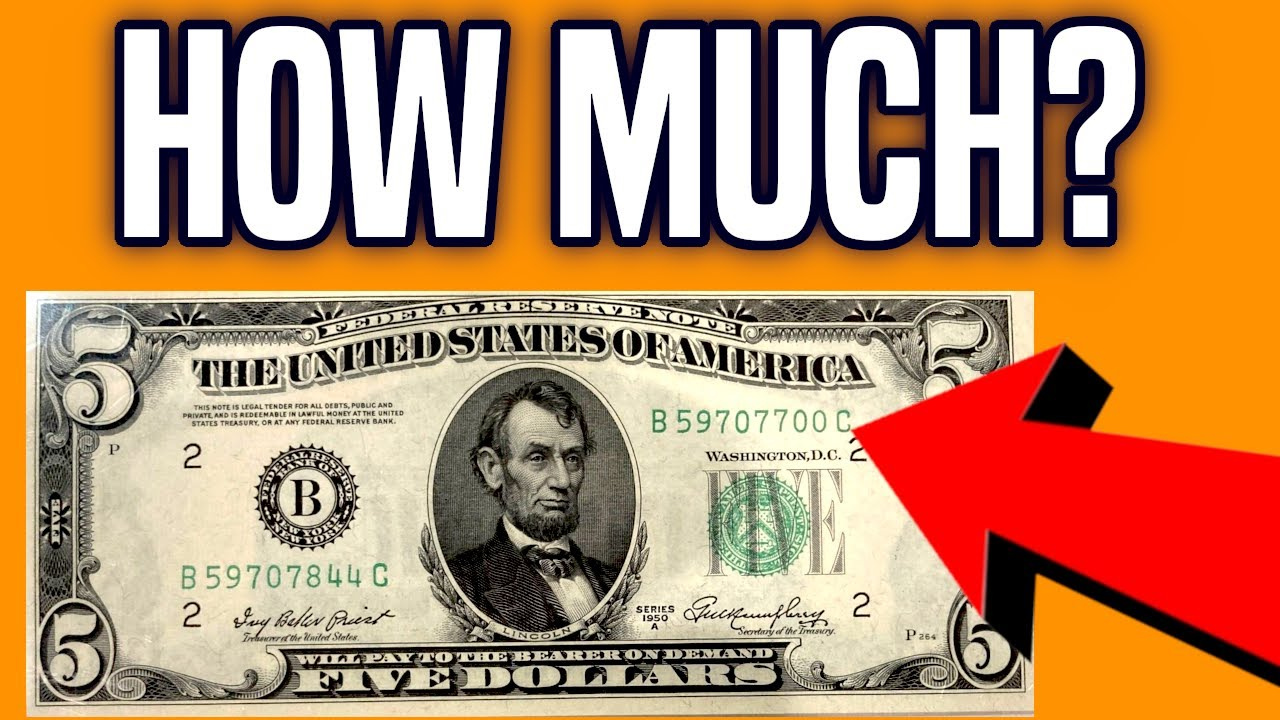
1995 $5 Bill :Most of us don’t think twice about the cash in our wallets. A five-dollar note is enough for a cup of coffee, a quick snack, or just some change at the end of the day. But what if one of those common notes turns out to be a collector’s treasure? That’s why currency enthusiasts are urging people to take a closer look at their money—especially if you have a 1995 $5 note with an upside-down seal.
What appears to be a minor printing error could actually be a very rare and valuable item.
The Beauty of Printing Mistakes
Paper bills are produced in very large quantities, and the process is very precise. However, like any large-scale operation, mistakes sometimes occur. These mistakes shouldn’t reach circulation, which is why they are so interesting and valuable when they do reach circulation.
An inverted seal is one of the most talked about currency mistakes. On a standard $5 bill, the Federal Reserve seal and serial number line up perfectly. In rare cases, the seal is printed upside down, creating a striking visual difference that collectors appreciate.
To the layperson, this may seem like a strange thing. To a collector, it can be worth far more than five dollars.
Why the 1995 Series Is Important
The 1995 $5 note is part of the earlier design era of U.S. currency, predating today’s more colorful and more secure notes. It features the classic portrait of Abraham Lincoln on the front and the Lincoln Memorial on the back, with the traditional green Treasury seal.
Because these notes have been in circulation for decades, finding one in clean condition is already difficult. Finding one with a major printing error—such as an inverted seal—is even more difficult.
This rarity drives demand in the collector market.
How to Check Your $5 Bill
You don’t need special equipment to start looking. Just follow these simple steps:
1. Look at the Series Year
Check the front of the bill near the portrait. You should see “Series 1995.” This confirms you’re examining the correct note.
2. Examine the Green Seal
On a normal bill, the green Treasury seal sits to the right of Lincoln’s portrait and is upright. On the error note, the seal appears completely inverted.
3. Compare the Serial Numbers
The serial numbers should match each other and align properly. On genuine error notes, the numbers are correct—the mistake is only in the seal’s orientation.
4. Check for Signs of Tampering
A real misprint happens during production. If the seal looks smudged, altered, or rubbed off, it’s likely damage—not a valuable error.
How Much Could it be Worth?
The value of a misprinted bill depends on three key factors:
- Condition – Clean, non-circulation notes fetch the highest price.
- How obvious the error is – A fully inverted, clearly visible seal is best.
- Collector demand – The smaller the error, the higher the price.
Some genuine misprinted notes have sold for far more than their face value, sometimes reaching hundreds or even thousands of dollars at auction. If the printing error is significant and genuine, even circulation examples can attract considerable interest.
The Importance of Authentication
Before celebrating, it’s important to have the bill professionally inspected. Currency grading services can confirm whether the note has genuine printing errors and assign it a condition grade.
This step not only prevents you from overestimating its value, but also makes the note more attractive to serious buyers.
A Reminder to Check Your Change
Stories of valuable coins and misprinted bills being discovered in everyday circulation continue to capture people’s imaginations. They remind us that history, rarity, and value can sometimes be hidden in the most common places—like a wallet, cash register, or tip jar.
The 1995 $5 bill with an upside-down seal is one such reminder. It turns a routine transaction into a potential treasure hunt.
More Than Just Money
It’s not just the price that makes these discoveries so special. It’s the thought that something ignored for years could suddenly become useful. A simple piece of paper, passed from one hand to another, can hold a story of craftsmanship, error, survival, and rediscovery.
So the next time you find loose change, pause before you put it away. Look carefully at the details—the seal, the serial number, the date.
Because hidden among the ordinary notes in your pocket, there could be a very special note waiting to be found.